Makokan
The Deer KingMakokan is Hohsalle’s servant and a practical, watchful companion whose work repeatedly carries him from the physician’s side into the dangers and histories surrounding the investigation. Once a stadium fighter left for dead, he owes his life to Hohsalle; later, he guards him amid a public attack, tracks a survivor through the Oki country, and brings knowledge of his own upbringing to the inquiry. His return to the Yukata Mountains, which he once fled, makes his service both a professional bond and a personal reckoning, ending Part II with the recognition of his sister Ilia.
Identity and Background
Makokan serves Hohsalle, a physician of distinguished Otawalle descent, and is closely associated with him in the field. He is not simply a subordinate who follows instructions: Hohsalle relies on him to observe, assist with practical work, and report what he learns. Makokan’s own knowledge has particular value because he grew up in the Yukata Mountains near the plains and understands the people and customs of the region.
His childhood was shaped by the Shinock family’s long service to the Inner Circle. For generations, the family had supplied servants; Makokan’s father accepted that inherited position, while his older brother and sister were trained from youth for work as traveling secret agents. They appeared at the family home only rarely, but their visits were a source of affection for Makokan, who was much younger than either of them. The contrast between the life he left and the one he now leads is stark: his family history had tied him to a system of service, and he eventually ran from his homeland as a fifteen-year-old.
Makokan’s background also places him near the consequences of imperial expansion. The mountain clans of Toga spoke Aquafa’s language and had defended its borders, but Zol did not recognize them as Aquafaese citizens after Aquafa became an imperial province. The empire’s relocation policy threatened those it classified as lower caste with removal from their homelands. Gansa leaders therefore considered a show of resistance, using the Lone Antlers as a force that might demonstrate the clans’ usefulness and secure better terms. This history helps explain the political landscape to which Makokan returns: allegiance, citizenship, and the right to remain at home are not interchangeable.
Service to Hohsalle
Makokan’s connection to Hohsalle began when he was close to death after being injured in the stadium. As a stake-fighter, he knew Hohsalle was one of the Sacred and had been permitted by the emperor to gather the bodies of those killed there. Makokan expected the physician’s arrival to mean that his own death was near. Instead, Hohsalle saved him. Makokan remembered waking in the mohalu’s hall and seeing Hohsalle still nearby after staying through the night. His gratitude and astonishment at that care help give their present-day service relationship its depth.
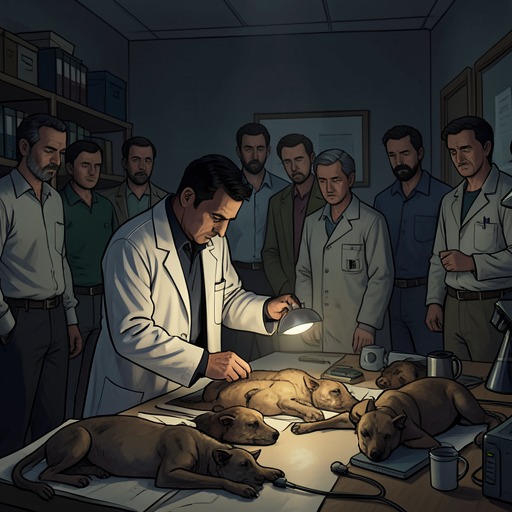
That relationship is active rather than ceremonial. During an examination of five bodies, Hohsalle has Makokan put on gloves and retrieve mikimu, a powdered-mineral insecticide, which he sprays over the corpses before they are undressed. Hohsalle instructs him to watch for fleas or ticks in the clothing. Makokan contributes his own observation, noting that the bodies are cold but not stiff; Hohsalle uses the absence of rigor mortis to estimate that roughly four days have passed. Their work joins Makokan’s practical assistance to Hohsalle’s medical reasoning.
At the salt mine, Hohsalle directs Makokan to accompany Sae while she seeks someone familiar with the enslaved workers’ lives. Makokan objects that he is Hohsalle’s servant and should remain at his side, but Hohsalle sends him to help and to report what he sees and hears. Makokan is displeased only briefly: he is curious about Sae’s capabilities and accepts the assignment. Hohsalle’s light manner gives way to a serious warning that Makokan should not take advantage of her loneliness. The exchange shows Hohsalle’s trust in Makokan as an independent observer, while also making clear that his instructions include personal boundaries, not only investigation.
Fieldwork and Protection
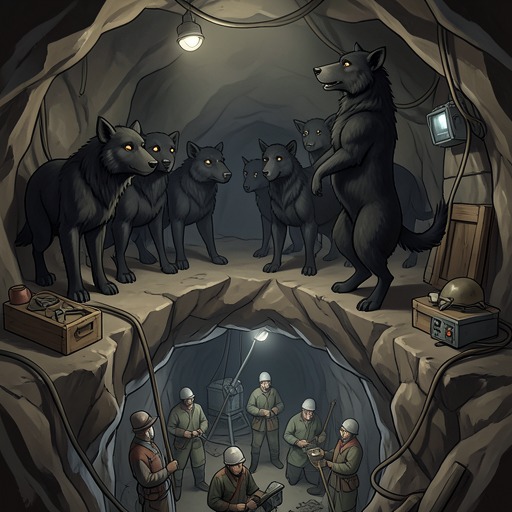
Makokan’s work often puts him in situations where alertness matters more than rank. While traveling with Sae down a cliff trail toward a valley, he senses danger against the rock wall and spots a dark face among the brush above. As more yellow-eyed shapes appear, he realizes that the animals are wolves rather than mountain dogs, draws his sword, and braces for their descent. The moment establishes him as someone who reads a threat quickly, even when the danger first presents itself only as movement at the edge of sight.
At the royal falcon hunt, his attention is initially directed toward Hohsalle, who appears drowsy while the guests wait for the contest to begin. When the attack erupts in the pavilion, Makokan draws his dagger and places himself in front of Hohsalle. In the crowded tent, the animals overturn furniture and the crush of people makes it difficult for guards to use their swords. Makokan tries to stop an animal attacking Sulumina, but a chair blocks his reach. Hohsalle pulls her away as Makokan clears the chair and strikes at the animal; it evades the blade, though the attempt drives it back. When Hohsalle warns him of another attack from behind, Makokan shifts his dagger to his other hand and slashes at the threat, again making it retreat. The sequence turns his ordinary role as attendant into direct protection of both Hohsalle and others in the pavilion.
Makokan is also part of the search for Van, the sole survivor known from the Aquafa salt-mine tragedy. Hohsalle explains that Van’s blood could help produce an especially effective serum. Makokan had already followed Van’s trail toward Oki with a Molfah tracker after the attack, though they failed to find him. At a later meeting, he recounts that pursuit at Hohsalle’s request, including what happened to Sae. The account makes him a witness linking the earlier search to the renewed effort to locate Van, rather than a source of the medical theory itself.
Knowledge, Relationships, and Return
Makokan’s usefulness also comes from knowledge he acquired before entering Hohsalle’s service. When Hohsalle is investigating the Ahfal Oma, Makokan recognizes that his own upbringing near the Yukata Mountains has left him familiar with them and their handlers. He is about to explain what handlers are when barking dogs interrupt. The scene draws a line between formal expertise and lived familiarity: Hohsalle brings medical and scholarly authority, while Makokan can supply regional understanding that the physician lacks.
He is not the only person in the investigation who can draw on administrative knowledge. Yotalu points out that Zol’s tax officers maintain detailed information about outlying nomadic groups, including their numbers and ages, and that some people may evade the officers by hiding in the woods. Hohsalle sees the records as a way to improve the search for Van. For Makokan, whose own history is tied to the borderlands, this information sits within a wider context of classification and rule: the same imperial reach that tracks people for taxation and makes a search possible has also determined who counts as a citizen and who may be displaced.
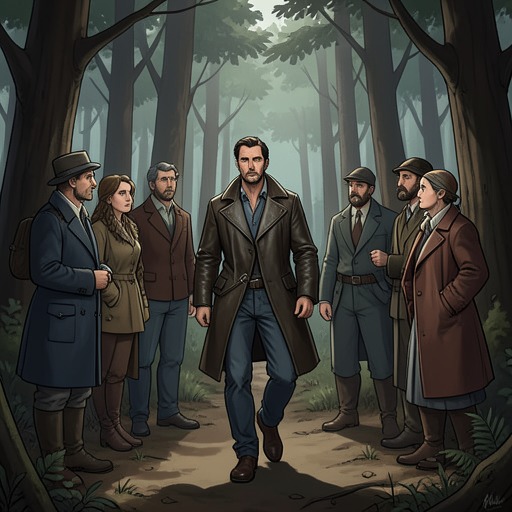
The return to his homeland is emotionally charged. Makokan thinks he would rather die than come back, recalling that he fled down the mountain road in the spring of his fifteenth year. Now, almost thirty, he travels the same route as the servant of a young heir of Otawalle. The reversal unsettles the meaning of his journey: he has returned not as the child who escaped, but in the service of someone whose ancestry reaches back to the old kingdom. Looking back, he recognizes that the future which once seemed colorless may have held possibilities he could not see as an inexperienced boy. His memory of his father’s sorrowful, resigned expression makes that realization personal, not merely political.
Makokan’s return also prompts him to reconsider the lives of people displaced by frontier settlement. He initially calls an older immigrant woman mean; Hohsalle answers that she had been forced from her homeland, lived among people who hated her and her community, and had no choice in the matter. Makokan accepts the correction. The broader account explains that poor farmers and herders on the edges of Zol’s realm were sent to new frontiers to establish Zolian-style settlements, grow preferred crops and livestock, and help incorporate conquered territory. Lower taxes and land of their own could benefit some settlers, but the loss of any prospect of returning home remained a deep cost. Makokan’s response links his personal exile to a policy that makes other people instruments of expansion, even when their material circumstances differ.
Change and Ending
The narrative does not resolve Makokan’s return or explain what his reunion with his family will mean. Instead, at the end of Part II, he hears a woman’s voice, recognizes her eyes and pursed lips, and struggles to say his sister’s name: Ilia. The recognition returns the personal history established earlier—the sister who had been trained for service and whose visits mattered so much to him—to the present as an immediate encounter. Makokan’s journey back toward a place he once rejected has therefore reached more than a geographical threshold. It has brought him face to face with the family and past that his flight had placed behind him, while leaving the consequences of that recognition open.